



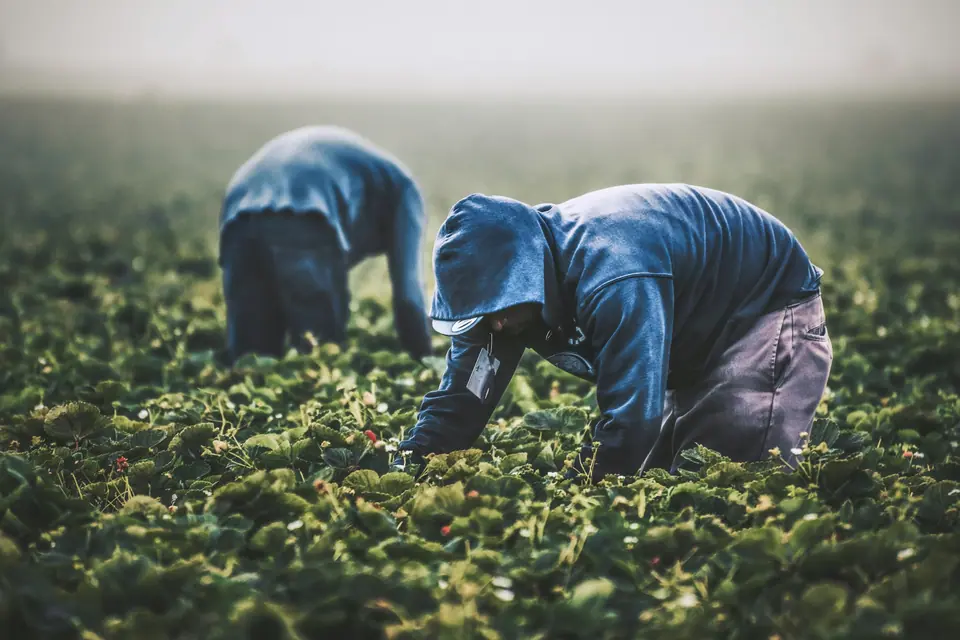
Everyone goes home the way they came.
Farm work in the southern San Joaquin Valley means triple-digit summers, pesticides nearby, ladders, machinery and long drives to the field. Here is exactly how we plan for each one.
Heat is the biggest risk. We plan for it every day.
We follow Cal/OSHA's Heat Illness Prevention standard for outdoor work. The live panel shows what today's Shafter temperature means for a crew.
| Temperature | What happens on a Ceres crew |
|---|---|
| Any day | Fresh, cool drinking water, free, close to the work — enough for at least 1 quart per worker per hour. Rest in the shade whenever you feel you need it, for at least 5 minutes. |
| Above 80°F | Shade goes up, big enough for everyone on a break to sit fully in the shade at the same time. |
| 95°F and above | High-heat procedures: a short meeting before the shift, supervisors and co-workers watching for signs of heat illness, reminders to drink water, and a paid 10-minute cool-down rest at least every 2 hours. |
| Heat waves and new workers | New workers are closely watched for their first 14 days while their bodies adjust. During a heat wave, everyone is watched closely. |
Heat illness prevention
Heat illness can go from a headache to an emergency fast. Our written heat plan is in English and Spanish, and every crew member and supervisor is trained on it before working in the heat.
What you can count on
- Water: cool, clean and free, placed as close to the work as possible, with enough for about 4 cups per hour for everyone.
- Shade: up at 80°F and above, and any time a worker asks for it.
- Cool-down rests: take one whenever you need it. You'll be watched and asked how you feel, and you won't be sent back to work until you feel better.
- At 95°F and above: pre-shift meetings, buddy checks and a paid 10-minute cool-down at least every 2 hours (it can line up with your regular rest break). If a required cool-down is missed, you are owed an extra hour of pay.
- Emergency response: every crew has someone authorized to call 911 and clear directions to the field, so help can find you.
Know the signs
Headache, dizziness, cramps, heavy sweating or no sweating, nausea, confusion. If you feel any of these — or see them in someone else — tell your supervisor right away and get into the shade.
Greenhouses & packing houses
Enclosed greenhouses and packing sheds fall under Cal/OSHA's indoor heat rule. When it reaches 82°F inside, we provide water, cool-down areas and heat training. When the temperature or heat index hits 87°F — or 82°F when workers wear heavy protective clothing or work near hot equipment — the site owner and Ceres put cooling measures in place, such as fans, misters, ventilation, shifted schedules or more breaks.
Pesticide safety
- Every field worker and handler completes pesticide safety (WPS) training every year, before starting work, in a language they understand.
- Crews stay out of treated fields until the restricted-entry interval is over, and never enter an area while it's being sprayed.
- California's pesticide safety leaflets (A-8 and A-9) are posted at the worksite, and supervisors will read them aloud on request.
- You can ask to see pesticide application records and safety data sheets for the fields you work in.
- Decontamination supplies — water, soap and towels — are at the field, and if someone may have been exposed, we get them to medical care.
Water, toilets & handwashing
Clean toilets and handwashing stations are provided in the field — at least one of each for every 20 workers, within a quarter-mile or a 5-minute walk. Use them any time you need to. Clean hands also protect the food we harvest.
Wildfire smoke
When the air quality index for fine particles reaches 151 or higher, we offer N95 respirators and adjust work where we can. California farmworkers can also use paid sick leave to avoid work during a declared emergency caused by smoke, extreme heat or flooding.
Rides & vehicles
- Farm labor vehicles are inspected and certified by the California Highway Patrol every year.
- Every passenger gets a working seat belt — and wears it.
- Drivers are licensed for the vehicle, medically certified and trained.
- Vehicles display our company name and license number, and the pay rates for the job are posted in English and Spanish.
See an unsafe vehicle? Tell the office — or call the CHP at 1-800-TELL-CHP.
Ladders, tools & gear
Ladders and tools are checked before use, and workers are trained on ladder safety, knife and shear handling, and working around tractors, transplanters and forklifts. Gloves, and any other protective equipment a job requires, are provided at no cost.
Speak up — no retaliation
If something feels unsafe, stop and tell your supervisor or call the office. You will not be punished for reporting a safety problem. You can also contact Cal/OSHA or the California Labor Commissioner directly, in Spanish or English. Our Policies page lists how.
Questions about safety on a crew?
Call the office. We'll walk you through our heat plan, training and transport — in Spanish or English.
Fri 8:30 am – 1:00 pm
Sat–Sun closed